

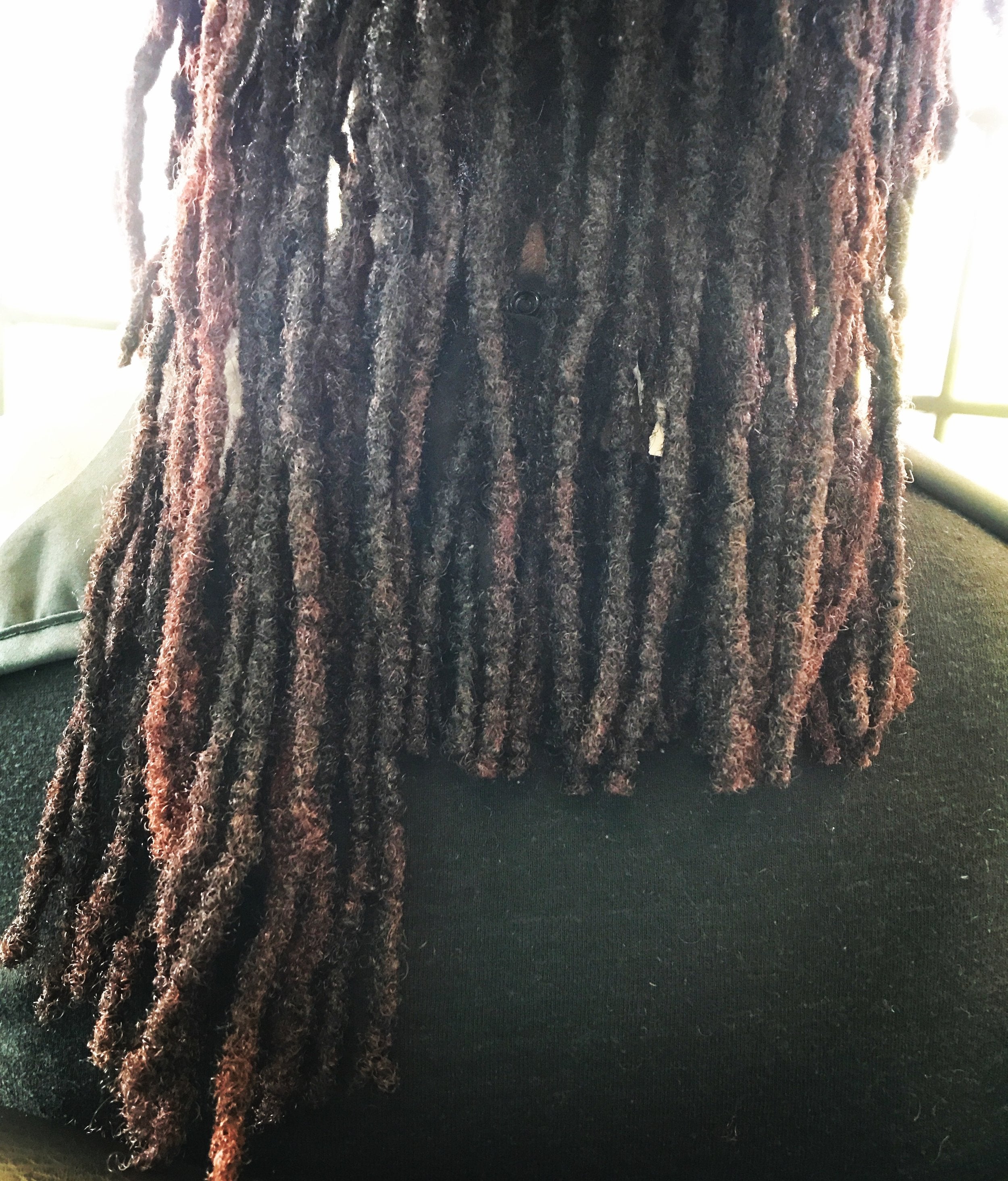
It may be that time of the month, or year where you need to change everything in your life, or one drastic change to tuck you into a safe new place. Many of us rearrange our houses, buy new clothing, or change our hairstyles. If you feel like it’s time to go for a short loc look, here’s the heads up on what to consider.
Loc Stage
Before you take the time to decide what length you desire, make sure your locs are at the right phase to alternate and fuss with. If you’re only a few months into your new natural look, better wait some more time, otherwise you risk your locs unraveling. Even with mature locs you risk the possibility of unraveling, if not all the way, than at least close to the tips. Some find loose ends desirable, and they are an attractive look, but make sure to consider the length and the look together.
Wash And Dry
One of the stronger motivations behind trimming locs is the amount of time it takes to wash and dry. With shorter locs, you’ll have less locs to wash carefully during each rinse. All in all, you’ll save on the products you use, since the shafts will be shorter, which also means less oil, less pre-cleanser, and less conditioner. Plus, your hair care routine will shrink in size with your loc length, depending on just how short you go.
Time is A Double Edge Sword
As we mentioned above, shorter locs means more time on your hands, literally. Now comes the BIG but. On the flip side, it does take painfully long to get your locs reaching somewhere naturally way past your shoulders. All major decisions come with a sacrifice, we’re in no way trying to put out your flame for shorter, cute locs, we just want to prepare you for the future as best we can. Maybe you’ve had long locs for as long as you can remember and you’re ready for that feeling of freedom change offers, well then, we say go for it. Just know, there is also much wisdom in moderation, but perhaps less thrill.
Remove the Old
Many natural loc’ers gravitate towards cutting their ends after they’re satisfied with their unified growth. The beginning of the journey can be awkward and uncomfortable, but with resilience and confidence most of us make it to the other side. However, you’ll notice that after a year or so, your locs are more unified at the top than towards the ends. Many opt for trimming off their beginning phase to keep their locs looking healthier and homogenous(er).
Another reason to trim your locs is if you’ve used wax or other build-up agents in your locs. Rather than starting all over again, the lucky ones are able to trim out the old and walk the new natural path. All the possibilities are up to you, all it takes is settling on what you want and going for it!