
There are a lot of myths, facts and factual myths floating around the internet concerning the sulfates found in shampoos, soaps, toothpaste and cleaning products. There are many who claim sulfates are a carcinogen and many who advocate that claim as a cancer-myth seeding through the internet. Rather than getting political, which can be pretty exhausting, let’s review what we do know about sulfates, and we’ll let you decide what’s right for you and your locs.
A Brief Background
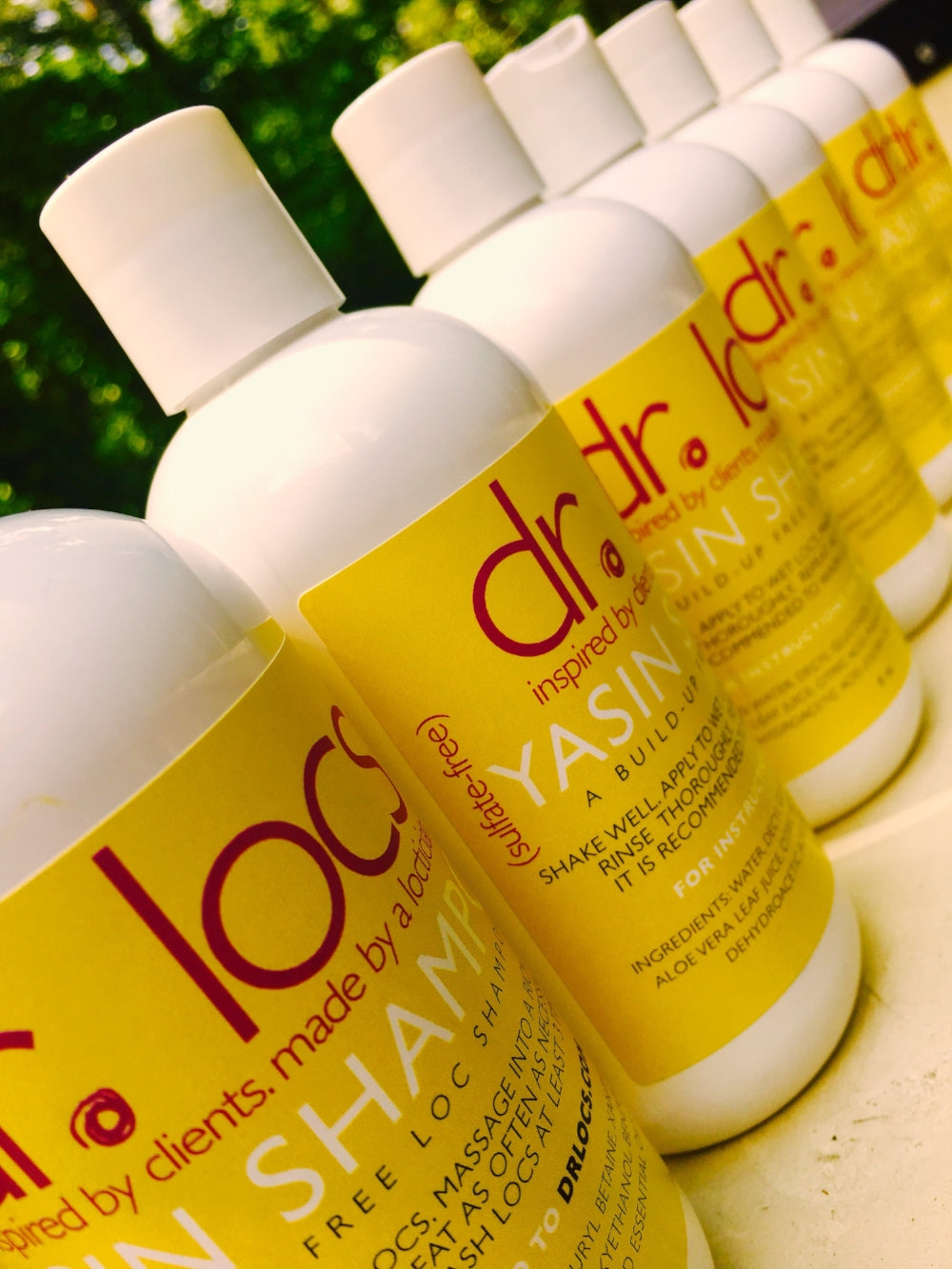
The first liquid shampoo was created around the year 1930 and was based on the synthetic ingredient called sulfate. Cosmetic chemists have been using that formula ever since, ever since we started realizing it wasn’t all that beneficial for your dreadlock care. This month Dr. Locs has released a newly formulated sulfate-free Yasin Shampoo and we want to let you know why.
So, what exactly are sulfates?
Sulfates are any chemical compounds that relate to sulfuric acid.
There are three types of sulfates commonly used in shampoos:
Sodium Laureth Sulfate (SLES)
Sodium Lauryl Sulfate (SLS)
Ammonium Laureth Sulfate (ALS)
Remember when you were a young student one of the first science projects, besides leaving a fallen tooth in coca-cola to watch it rot and decompose, was to try and mix a glass of water and oil and to observe what happens? Right, the water and the oil separated, sending the oil to the top of the glass and the water to the bottom. Here’s where sulfate come in. Sulfates are special in a way that they are a mixture of molecules that are known to attract both water and oil. Groovy.
This clever property is what works at pulling the dirt and oil up and out while allowing the water to wash those guys down and away from your hair and body. This may also explain why it’s found in so many cleaning products.Pretty good right? Well, not completely. There is an interesting debate out there whether sulfates are profitable for your skin and hair in the long run.
Additionally, sulfates are the ingredients in your shampoo that creates foam while your gently massaging your scalp and roots. Some people like this effect since they are used to this reaction. High levels of foam mean you can also use less shampoo more often. This is one of many things to consider when choosing your loc care products, but that’s not all.
The Dangers and Damages of Sulfate Compounds
While the sulfates work at wiping away the dirt and oil from your skin and locs, it simultaneously drags out those nourishing essential oils your skin and hair want and need.
Sulfates are said to cause dryness and irritation (especially to the eyes).
If you have colored locs, sulfates will strip some of that color right down the drain, bye bye bright blue!
Many sulfates are based off of sulfur which is derived from Petrolatum. Petrolatum is a nonrenewable resource like fossil fuels. So, many environmentally conscious people prefer sulfate-free products.
The best advice we can give you is to see for yourself what you prefer. If you have been battling dry skin conditions such as eczema, if your locs seem exceedingly dry and brittle, or if you are frustrated with frizz, try sulfate-free products and see how their benefits work for you in the long run. You may have just discovered the product of your dreams, or at least we hope so!
This month celebrate the Yasin Shampoo with Dr. Locs as we offer 25% off all 8oz and 16oz bottles. This promotion open until August 31th.